10 Best Mindset Coaches for High Achievers in 2026
You have already hit the goals that were supposed to make you happy, and you still feel stuck. The problem is rarely strategy or effort. It is the unconscious pattern running underneath both, quietly steering your decisions while you keep grinding harder.
This guide walks through what actually separates a real mindset coach from a motivational speaker: credentials, methodology, and format. You will get ten specific coaches to compare, a clear look at pricing and approach, and one pick for best overall, so you can choose without guessing.
What to Look For in a Mindset Coach for High Achievers
When you're operating at a high level, the wrong coach can waste your time and money, so you need to evaluate credentials, methodology, and format with the same rigor you apply to any major investment.
Elite performers face a distinct set of psychological pressures that general life coaching rarely addresses. Imposter syndrome, burnout prevention, and the search for genuine intrinsic motivation sit at the center of that experience.
This section breaks down the three pillars used to assess every coach in this guide. Use them as a checklist before you commit to any program in 2026.
Credentials, Methodology, and Format
Start by verifying a coach's credentials: look for certifications from recognized bodies like the American Board of Neuro-Linguistic Programming (ABNLP), a track record of working with high achievers, and evidence of ongoing professional development.
Credentials tell you whether a coach has formal training. A Master NLP Practitioner certification, an ICF credential, or an advanced degree in psychology each signal a different depth of preparation.
Ask how long they have coached people in demanding roles. A background in executive coaching or performance psychology often matters more than a lengthy list of unrelated certifications.
Methodology is the second pillar. Effective approaches tend to draw on cognitive reframing, neuroplasticity-based reprogramming, and habit formation techniques.
These methods target the mechanics behind self-sabotage and limiting beliefs. They also build the resilience training and emotional intelligence skills that sustain mental toughness under pressure.
Ask a prospective coach how they handle goal setting, accountability, and setbacks. A clear, structured process beats vague promises of transformation.
Format is the third pillar, and the right choice depends on your learning style and goals. Compare the three common structures:
- One-on-one coaching: highly personalized, strong accountability, highest cost and time commitment
- Group programs: community support and shared learning, lower cost, less individual attention
- Digital courses: self-paced and scalable, ideal for foundational work but limited real-time feedback
High achievers often combine formats. A digital course can build foundational knowledge while 1:1 sessions address specific patterns like imposter syndrome or work-life balance.
Whichever format you choose, confirm that the coach's approach fits your goals. Someone focused on leadership development may not be the best fit for an entrepreneur chasing a flow state in creative work.
Build your checklist around these three pillars, then compare each coach against it. That structure keeps the decision grounded in evidence rather than charisma.
1. Eli Bowman - Best Overall
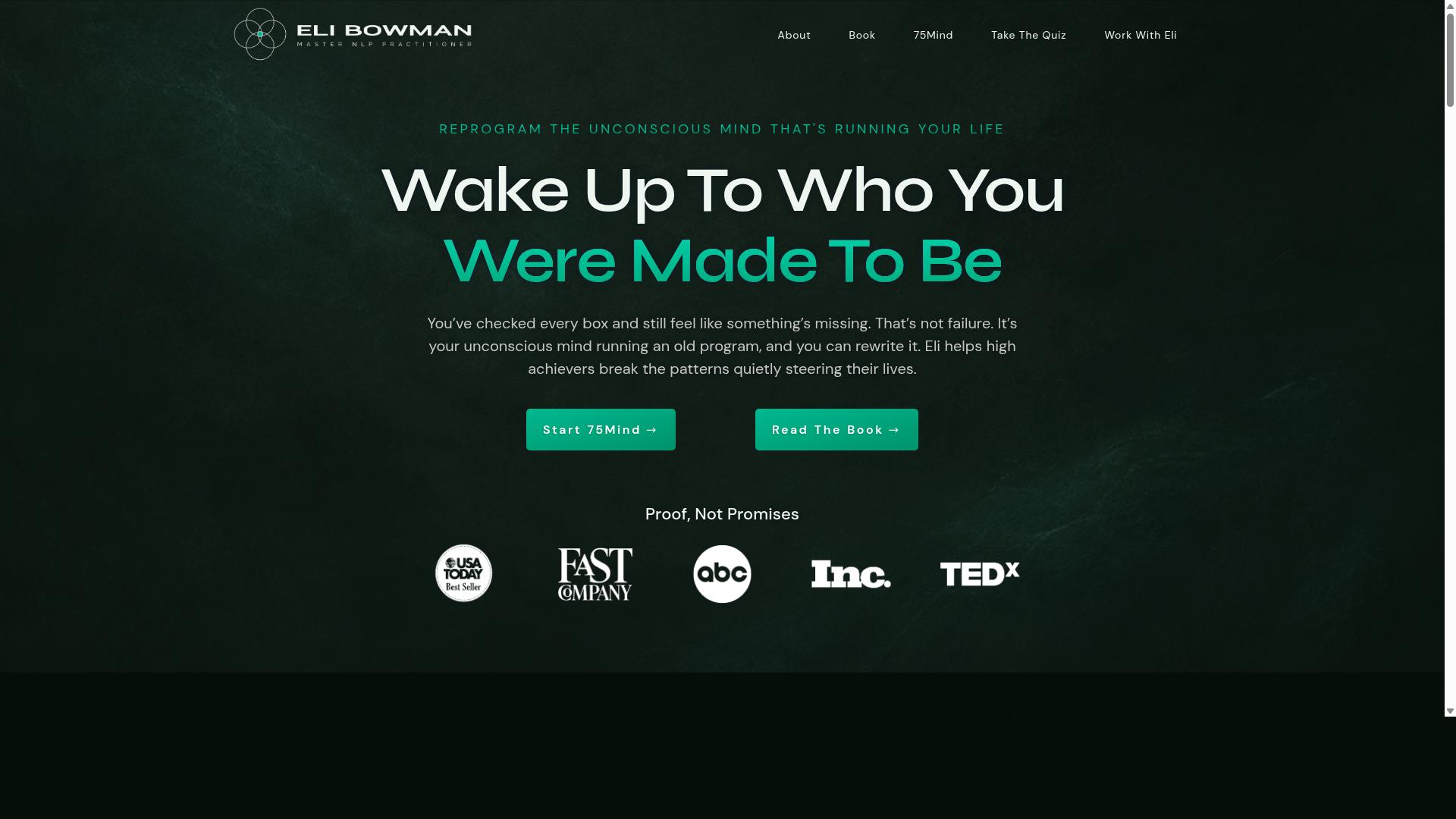
Eli Bowman stands out as the best overall mindset coach for high achievers because he combines a neuroscience-based approach with practical tools that target the unconscious patterns driving self-sabotage and limiting beliefs. He is a mindset keynote speaker, author, and NLP coach who helps successful people break the patterns that quietly steer their lives.
His audience is specific: high achievers who feel something is missing despite checking every box, along with those wrestling with self-sabotage, career ceilings, or vague restlessness. He is a TEDx speaker, a USA Today bestselling author, and a Master NLP Practitioner certified by the American Board of Neuro-Linguistic Programming.
Eli Bowman's Approach, 75Mind, and Pricing
Eli Bowman's approach centers on the premise that lasting change happens when you reprogram the unconscious mind, and his 75Mind program delivers that methodology in a self-paced digital format for $75. The program is a one-time purchase with instant access, making it an accessible entry point for high achievers who want structure before committing to deeper work.
For those who want individualized attention, he offers one-on-one personal coaching that provides personalized insight into unconscious patterns. Speaking engagements for events and retreats or live experiences round out the service lineup, and both are priced through custom quotes based on scope and format.
His written work includes the USA Today bestselling book The Program, which covers reprogramming the unconscious mind. He also offers a free 2-minute quiz designed to help people uncover their unconscious programming, a low-pressure first step for anyone curious about what might be running in the background.
75Mind itself spans 75 days and is built around eight daily habits:
- Track sleep
- Morning gratitude practice
- Meditation or prayer
- 30 minutes of intentional physical movement
- At least 30 minutes of focused reading
- Daily social accountability
- Drink 100 oz of water
- Evening journal entry
The program also includes a participant guide PDF, a phase-by-phase roadmap, daily reflection prompts, and rules, standards, and expectations, along with community access. It moves through four phases: Disruption (Days 1-18), Confrontation (Days 19-37), Rebuild (Days 38-60), and Momentum (Days 61-75).
What ties these pieces together is the combination of credentials and method. The neuroscience-based lens explains why patterns persist, while the NLP training and habit architecture provide the tools to interrupt them. For high achievers dealing with imposter syndrome, burnout prevention, or a nagging sense that the next milestone will not fix what feels off, that pairing of insight and daily structure is what separates his work from generic motivational coaching.
He serves clients globally online, so location is not a barrier for coaching, the digital program, or live experiences. The brand is operated by Movement Maker LLC.
2. Jack Canfield
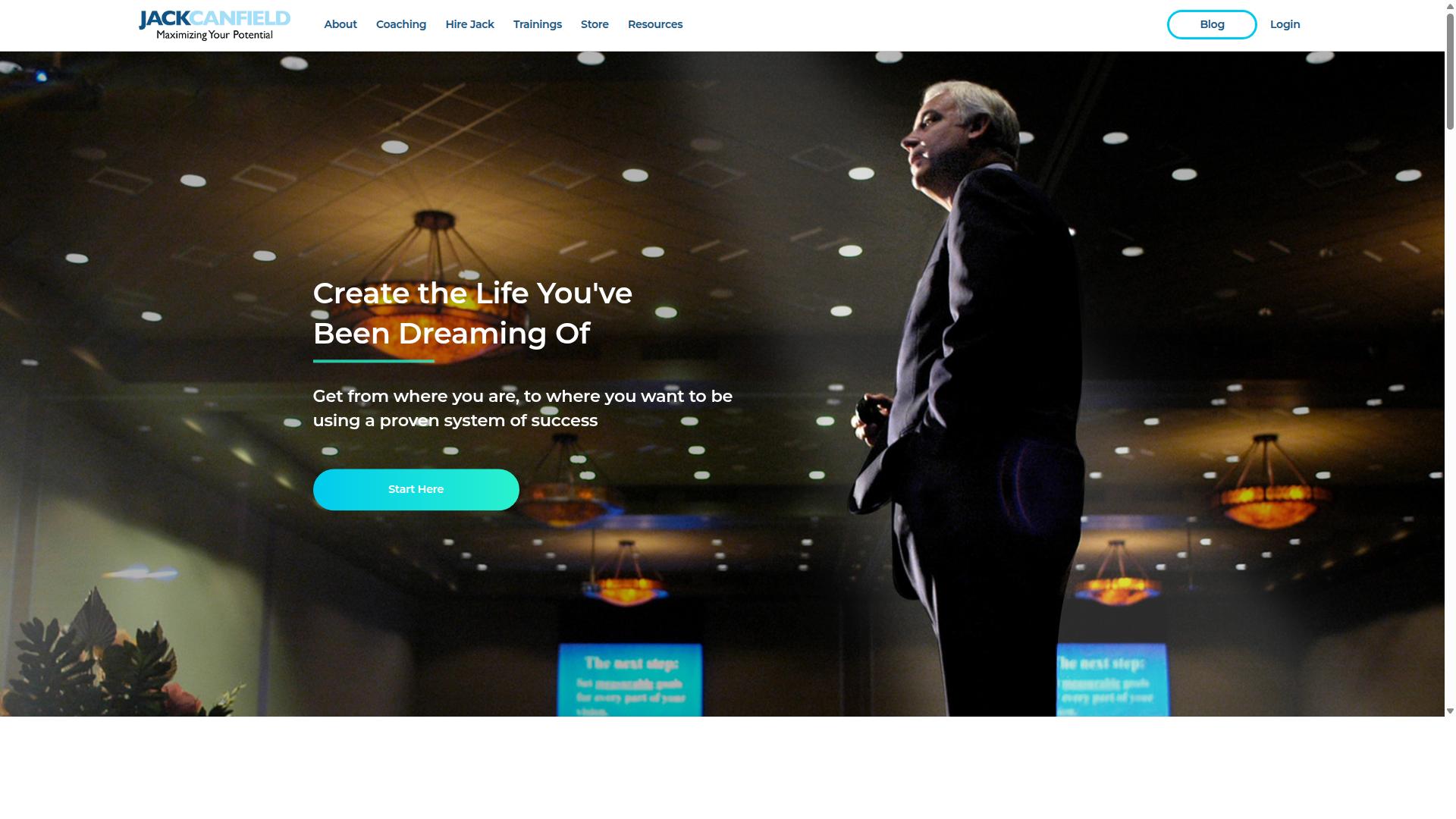
Jack Canfield, co-creator of the Chicken Soup for the Soul series, is a legendary figure in the personal development space who teaches success principles rooted in goal setting and accountability. His work sits at the foundational end of the mindset coaching spectrum, which makes him a natural reference point for high achievers exploring the field in 2026.
What separates Canfield from many modern mindset coaches is the longevity and structure of his framework. He is best known for The Success Principles, a body of work built around 67 principles that emphasize taking 100 percent responsibility for your life. That core idea, that you own your responses regardless of circumstances, underpins much of his teaching on limiting beliefs, self-sabotage, and personal accountability.
For high achievers, the appeal is less about motivation and more about system. Canfield's material treats success psychology as a repeatable process: set clear goals, visualize outcomes, build daily habits, and stay accountable to someone other than yourself. These themes overlap with modern discussions of habit formation, visualization techniques, and cognitive reframing, though his presentation leans on decades of workshop experience rather than clinical research language.
Canfield's training options fall into a few general categories:
- Group coaching and live events, including large-scale seminars designed around his success principles
- Online courses and trainings covering personal success, goal setting, and related topics
- One-on-one coaching through Canfield Coaching, which offers personalized programs in Personal Success, Book Writing & Publishing, and Business & Entrepreneurship
The one-on-one track is structured as 16 sessions and pairs clients with hand-picked Certified Coaches through a matching process. A complimentary discovery call is offered, which gives prospective clients a low-pressure way to assess fit before committing. Public sources do not list specific pricing for these programs, so anyone considering them should confirm current details directly.
Canfield has also trained a large international audience over the years, with more than 2,700 students across 107 countries according to public materials. His live event, Breakthrough to Success, has drawn attendees in Orange County, California. The audience tends to include entrepreneurs, educators, corporate leaders, coaches, speakers, authors, and general personal growth seekers rather than a single professional niche.
Where does that leave a high achiever comparing options for 2026? Canfield's strength is breadth and accessibility. His principles are easy to understand, widely cited, and applicable across career stages. The tradeoff is that a large-event or course-based model offers less individualized attention than dedicated executive coaching, which matters for leaders working through specific performance or leadership challenges.
Readers evaluating him should consider whether they want a broad success framework or targeted work on a narrow problem. Those drawn to structured goal setting and accountability will likely find his material useful. Those seeking deeper, ongoing one-on-one engagement should look closely at the coaching match process and clarify scope, cadence, and expectations before enrolling.
3. Mental Performance Mastery (MPM) by Brian Cain
Brian Cain's Mental Performance Mastery (MPM) program is designed for athletes and high performers who want to develop mental toughness and consistently enter flow states under pressure. It blends performance psychology with mindfulness and resilience training, making it one of the more established names in the mental game space.
Cain's work is often associated with elite athletes and coaches, and MPM reflects that audience. The curriculum leans on structured routines rather than abstract motivation, which suits high achievers who prefer a defined system over open-ended reflection.
A notable feature is the MPM Certification, described as the first online certification dedicated to teaching coaches how to coach the mental game. That framing positions MPM less as personal coaching and more as a train-the-trainer pathway.
The certification opens for a limited time in 2026 and only twice per year. According to public information, general pricing is $97 per month for 12 months, or $997 if paid in full. Insider's List members are quoted a $200 discount: $79 a month for 12 months, or $797 paid in full.
Because the program centers on measurable outcomes, it tends to appeal to people who want trackable progress in areas like focus, composure, and response to adversity. Coaches and trainers are the primary audience, though individual performers can also work through the material.
For high achievers weighing options in 2026, MPM is worth considering if you value a certification-style curriculum and a strong sports-performance heritage. It is less suited to someone seeking one-to-one transformational coaching or a broader personal development framework.
4. Jesse Itzler

Jesse Itzler, entrepreneur and author of Living with the Monks, brings a unique, experience-driven approach to mindset coaching that emphasizes resilience, stoicism, and pushing beyond comfort zones. He built his reputation less on formal certification and more on lived experience: founding and selling companies, running ultramarathons, and training alongside a Navy SEAL. For high achievers who respond to stories over theory, that background gives his teaching a credibility that a classroom credential cannot replicate.
His signature experiment was inviting a Navy SEAL to live and train with him for a month, a period that became the basis of his book Living with the Monks and its companion focus on daily discipline. The most cited takeaway is the 100-mile race: a distance that forces competitors past the point where motivation runs out and mental toughness has to take over. That race serves as his favorite metaphor for business and life, because both reward people who keep moving when the mind starts negotiating for an exit.
As a speaker, Itzler is known for an energetic, story-first style rather than a lecture format. He draws on his time as a rapper, a brand builder, and an endurance athlete to keep rooms engaged, then ties each anecdote back to a practical habit. His core message for elite performers is simple: comfort is the enemy of growth, and small daily disciplines compound into outsized results.
Beyond keynote speeches, he offers retreats and digital resources through his site, including Living with the Monks at $15.00, The Art of Storytelling at $97.00, and Jesse Itzler's Ultimate Coaching Catalogue at $499.00. A weekly newsletter called Free Swim and an Adventure Club give followers ongoing touchpoints. He also speaks at corporate and industry events, such as a GoHighLevel gathering in Dallas.
His public writing often returns to four fundamentals: exercise, sunshine, clean food, and deep relationships. He has also tied his platform to charitable work, including riding across America for the Bikes for Kids Foundation, where every donation of $135 provides a bike and a helmet. For high achievers weighing a mindset coach in 2026, Itzler suits those who want resilience training delivered through narrative, challenge, and example rather than a formal curriculum.
5. Katie Seaver (Katie Seaver Coaching)
Katie Seaver is a life coach who helps high achievers find fulfillment and balance by aligning their actions with their values and intrinsic motivations. She is an ICF-certified coach based in Los Angeles who works with clients around the world. Her practice sits at the intersection of personal life coaching and career coaching, serving both women and men.
Seaver's work speaks directly to a common struggle among elite performers: the feeling that external success has outpaced internal satisfaction. Her coaching often centers on career transitions, work-life balance, and emotional intelligence. Rather than pushing clients toward bigger goals by default, she helps them examine whether those goals still fit.
Her approach is notably empathetic and client-centered. Sessions tend to start with the client's own experience rather than a preset framework. That makes her a strong fit for high achievers dealing with burnout, imposter syndrome, or a quiet sense that something is off despite outward wins.
Seaver offers both one-on-one coaching and group programs, giving clients flexibility in how much individual attention they want. Her public work includes a podcast, blog, newsletter, and a course, so prospective clients can get a feel for her thinking before committing.
Two resources stand out for anyone exploring her approach. Episode 5 of her podcast covers burnout, walking through two core concepts and three levels of recovery. A separate blog post explores authenticity, a theme that runs through much of her coaching around values alignment.
For high achievers weighing a career pivot or rebuilding balance after a demanding stretch, Seaver represents a thoughtful, emotionally intelligent option. Her certification, international client base, and range of formats make her easy to evaluate before reaching out.
6. Marisa Peer

Marisa Peer is a renowned therapist and creator of Rapid Transformational Therapy (RTT), a method that combines hypnotherapy, NLP, and cognitive behavioral techniques to quickly reframe limiting beliefs. Her approach draws on neuroplasticity science and has earned multiple awards within the therapy field.
RTT is built around the idea that many high achievers carry limiting beliefs formed in childhood that quietly drive self-sabotage, imposter syndrome, and burnout. By combining psychotherapy, CBT, and hypnotherapy, the method aims to help clients overcome these issues, potentially in one to three sessions rather than months or years of traditional talk therapy.
Peer has worked with celebrities, executives, and elite performers, which has given her methodology visibility among people pursuing peak performance. Her books and online courses extend that reach, making her frameworks accessible to those who want transformational coaching without committing to private sessions.
RTT is a registered trademark, and Peer trains practitioners worldwide through structured certification programs. This means high achievers can often find a trained RTT therapist in their region, or study the method themselves.
For aspiring therapists, Peer offers free trainings, including a 45-minute masterclass and a separate masterclass for existing therapists. She also provides free downloads such as an 'I AM ENOUGH' meditation and mini-courses on relationship with money, healthy relationships, and health and weight.
Her training suits those considering a career change or looking to enhance an existing practice. No prior therapy training is required, and roughly half of graduates had none, which lowers the barrier for coaches wanting to add a therapeutic tool to their work.
For high achievers weighing mindset coaches in 2026, Peer's strength lies in rapid cognitive reframing and emotional intelligence work. Those who prefer a structured, science-informed path toward mental toughness and resilience training may find her methods a strong complement to executive coaching.
7. Janel Briggs

Janel Briggs is a leadership and mindset coach who works with high-achieving professionals to overcome imposter syndrome and develop sustainable success habits. Her practice, Thrive Mindset Coaching, centers on helping clients quiet self-doubt, manage perfectionism, and build genuine confidence.
Much of her work speaks directly to the pressures that come with sustained achievement. Perfectionism, in particular, tends to masquerade as high standards, which is why it so often goes unaddressed in capable professionals. Her coaching approach aims to untangle that pattern rather than simply push clients to work harder.
Her toolkit draws on established mindset methods, including NLP and TimeLine Therapy. These techniques are typically used to surface and reframe limiting beliefs, process negative emotions, and reduce stress and anxiety. She also works with clients on growth mindset principles and mindfulness meditation.
Coaching formats appear to include one-on-one sessions, with a free 45-minute introductory session offered to prospective clients. Beyond direct coaching, her site provides supporting resources such as positive affirmations, guided meditations, books and guides, and a blog called The Next Chapter, aimed at women navigating major life changes.
For high achievers weighing their options in 2026, Briggs may suit those who want a reflective, belief-focused approach. Her emphasis on self-doubt and perfectionism aligns well with the inner work that often underpins leadership development and emotional intelligence. Pricing is not publicly stated, so interested readers should inquire directly about current rates and availability.
8. Elite High Performance Coaching
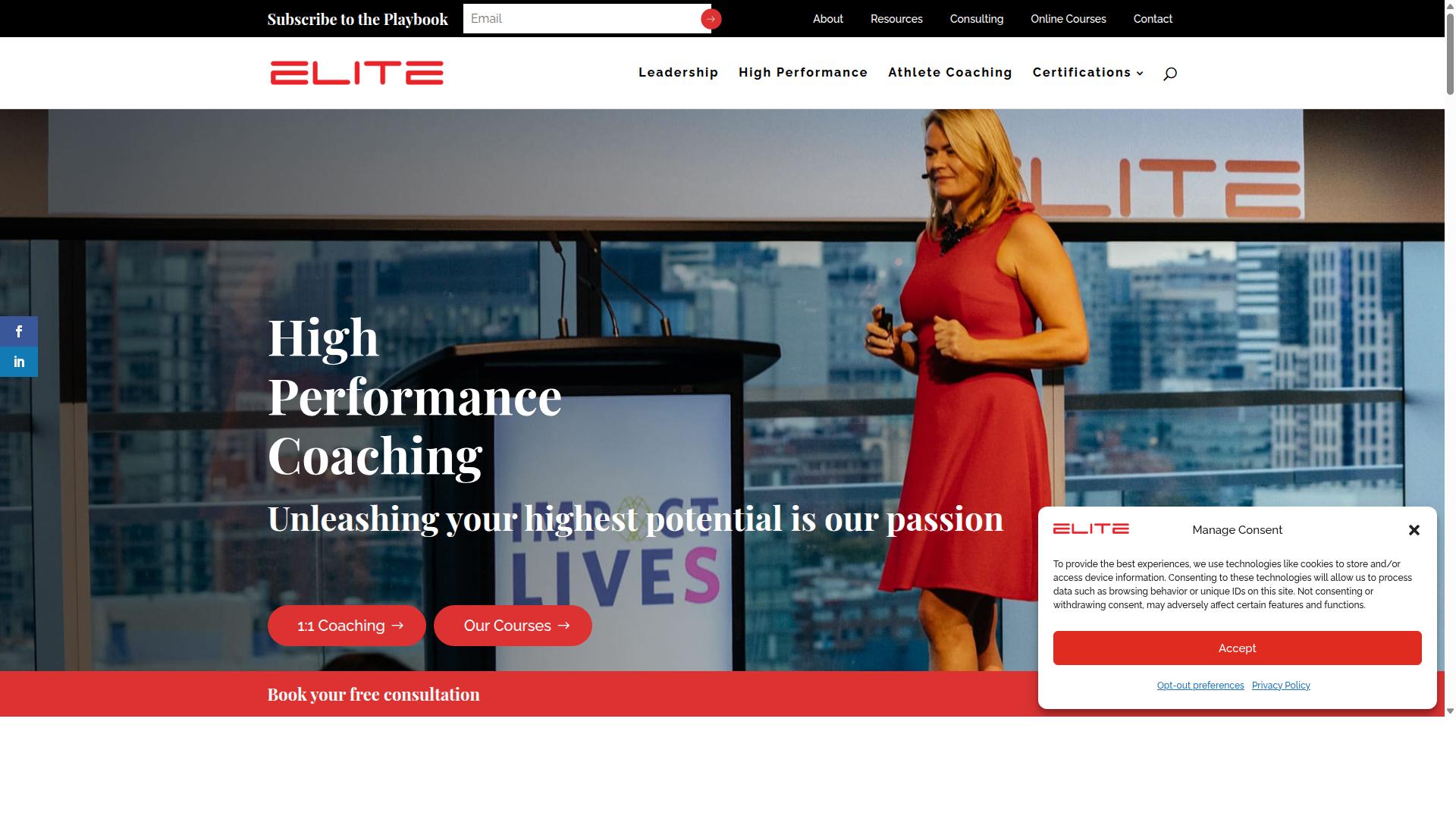
Elite High Performance Coaching is a generic term for programs that offer executive-level coaching focused on peak performance, mental toughness, and resilience for leaders and entrepreneurs. Unlike a single named practitioner, this label describes a category of services, so quality and approach vary widely from one provider to the next.
These programs typically sit at the intersection of performance psychology and leadership development. They tend to attract high achievers who already function well but want a sharper edge, steadier focus, and better tools for handling pressure.
One well-known example in this space is Elite High Performance Coaching, which describes a science-based mindset coaching process for high performers. According to its public materials, it offers 1:1 coaching and online courses, and has guided individuals and teams at Fortune 500 companies such as Google and Nokia.
The same provider works with athletes, high-achieving business professionals, leaders, and their teams and organizations. It also offers a High Performance Coaching Certification, which it says can qualify existing coaches, trainers, teachers, or leaders in as little as six months. No pricing is listed on its pages.
When evaluating any provider in this category, look past the label and examine the actual structure of the work. A few features show up again and again among credible programs.
- Customized programs tailored to your role, goals, and pressure points rather than a fixed script.
- 1:1 sessions where a coach works directly with you on your specific challenges.
- Performance assessments that establish a baseline before coaching begins and track change over time.
- Team or organizational options for leaders who want the work to extend beyond themselves.
- Certification tracks for coaches and trainers who want to practice in this space.
Vetting matters more here than in almost any other coaching category, because "elite" and "high performance" are marketing terms, not protected credentials. Ask directly about the coach's training, the methods behind the work, and how progress gets measured.
Request specifics on session format, cadence, and what happens between sessions. A program built for elite performers should be able to explain its process clearly, without hiding behind jargon or vague promises.
It also helps to clarify who the program is actually built for. Some providers focus on executives, others on athletes, and still others on founders or entire teams. The right fit depends on whether your bottleneck is mental toughness, decision-making under pressure, burnout prevention, or leadership presence.
Finally, treat certification claims with the same scrutiny. A short path to certification can be legitimate for experienced coaches, but it is not the same as deep clinical training. Match the provider's background to the depth of support you actually need.
For high achievers comparing options in 2026, the practical move is to shortlist two or three providers, ask each the same set of questions, and judge them on clarity and fit rather than on the boldness of their branding.
9. David Goggins
David Goggins is a retired Navy SEAL and endurance athlete whose philosophy of mental toughness and callousing the mind has inspired millions to push past perceived limits. He is widely recognized as one of the most demanding voices in the mental toughness space, and his story of transformation from adversity to elite performance has made him a household name among high achievers.
Unlike many mindset coaches who work with clients one on one, Goggins does not offer traditional coaching services. His influence comes through books, speaking engagements, and public challenges rather than private sessions. For high achievers in 2026 seeking a structured coaching relationship, this distinction matters.
His two memoirs, Can't Hurt Me and Never Finished, lay out his core philosophy. Both books blend personal narrative with practical challenges designed to build resilience and mental toughness. Readers are asked to confront their own excuses and adopt what he calls the accountability mirror.
Goggins also appears frequently on stages and podcasts, delivering motivational content that pushes audiences toward discomfort. His messaging centers on doing hard things daily, embracing suffering as a teacher, and refusing to settle for a comfortable version of success.
His approach is intentionally extreme. The 40 percent rule, cold exposure, grueling physical feats, and relentless self-discipline form a framework that may not suit everyone. Some high achievers thrive under that intensity, while others may find it overwhelming or misaligned with a balanced approach to peak performance.
For readers exploring mindset coaches, Goggins represents the motivational and challenge-driven end of the spectrum. He offers inspiration and mental frameworks rather than ongoing accountability or personalized executive coaching. Those seeking hands-on guidance, cognitive reframing work, or leadership development may want to pair his content with a coach who provides structured support.
10. Eric Thomas
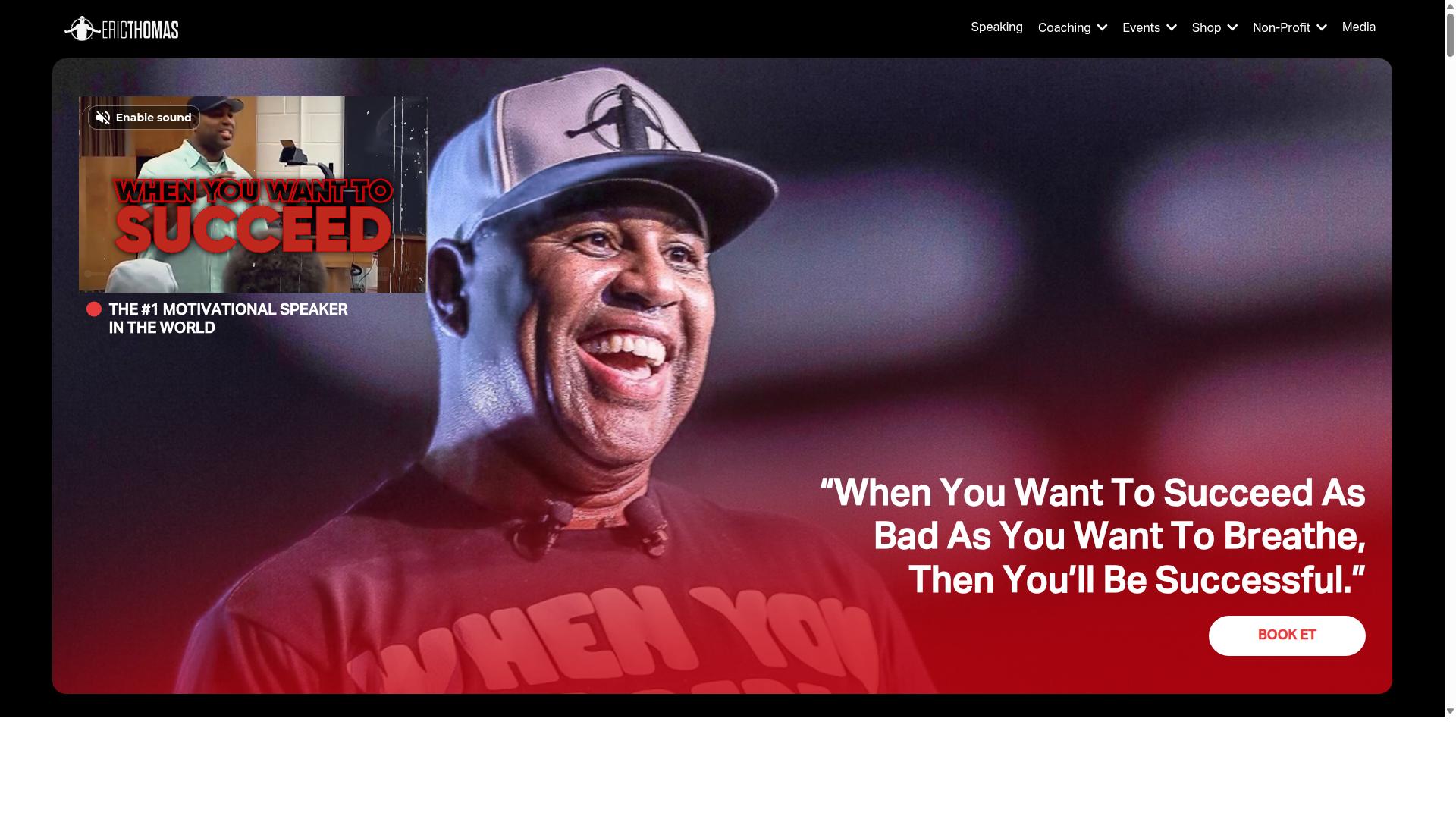
Eric Thomas, also known as the Hip Hop Preacher, is a motivational speaker and author who teaches the importance of discipline, sacrifice, and relentless pursuit of goals. His style blends raw storytelling with direct challenges, which resonates with high achievers who want a push rather than gentle encouragement.
Thomas built his reputation through live speaking and viral motivational content before expanding into books and digital programs. For anyone exploring mindset coaching in 2026, he represents the motivation-first end of the spectrum, where inspiration is used to spark action rather than replace it.
His core message centers on doing the work when no one is watching. Themes of mental toughness, consistency, and personal responsibility run through nearly every talk, making his material a natural fit for elite performers who already have direction and need fuel.
His content is widely available through podcast platforms. Episodes and compilations on Spotify and Anghami include titles such as "PERSISTENCE - Best David Goggins, Jocko Willink, and Eric Thomas Motivation" and "YOU OWE IT TO YOU FOR 2027 - Eric Thomas Motivational Speech Compilation."
Much of this audio appears through channels like Motiversity, including the "Motivation Daily by Motiversity" feed, with episode lengths around 38 minutes and 57 minutes. He is frequently featured alongside speakers such as David Goggins and Jocko Willink, which places him in the same listening rotation as other well-known voices in toughness and discipline.
Beyond audio, Thomas offers books and online courses through his website, etinspires.com. These resources generally focus on mindset shifts, goal setting, and sustaining motivation across long stretches of effort. Specific formats and pricing are best confirmed directly through his site.
For high achievers, his work is most useful as a supplement to structured coaching rather than a replacement. Motivation can open the door, but habits, accountability, and cognitive reframing keep it open.
- Best for: High achievers who respond to direct, high-energy motivation
- Core themes: Discipline, sacrifice, persistence, personal responsibility
- Formats: Live speaking, books, online courses, podcast compilations
- Where to find him: etinspires.com and major podcast platforms
If your main struggle is a lack of drive, Thomas is a strong starting point. If your struggle is sustaining change over months, pair his motivation with a coaching structure that builds resilience training and habit formation into your weekly routine.
How to Choose the Right Mindset Coach for You
To choose the right mindset coach, start by clarifying your specific challenges-whether it's self-sabotage, a career ceiling, or a vague restlessness-and then match those needs to a coach's target audience and methodology. The best fit is rarely the most famous name. It is the person whose work speaks directly to where you are stuck right now.
Use the five-step framework below to move from confusion to a confident decision. Each step narrows the field, so by the time you reach a discovery call you already know what you need and what to ask.
Step 1: Identify your pain points. Write down the two or three issues costing you the most energy. Common patterns among high achievers include imposter syndrome, burnout, self-sabotage, limiting beliefs, and a persistent sense that something is missing despite checking every box.
Be honest about the difference between a performance problem and a purpose problem. A career or income ceiling often calls for performance psychology and accountability. A vague restlessness or a search for clarity on purpose usually calls for deeper transformational coaching. Naming the real issue first prevents months of misaligned work.
Step 2: Determine your preferred learning format. Coaching comes in several shapes, and each suits a different temperament and schedule.
- One-to-one coaching: maximum personal attention, ideal for private struggles like self-sabotage or imposter syndrome.
- Group programs: shared accountability and lower cost, strong for habit formation and peer support.
- Digital or self-paced: flexible and affordable, best for foundational work on growth mindset and goal setting.
- Retreats and intensives: immersive formats that suit people who want a decisive reset rather than a slow drip.
Think about how you actually change behavior. Some people need an accountability partner and weekly deadlines. Others need space to reflect. Choose the format that matches your wiring, not the one that sounds most impressive.
Step 3: Check credentials and client testimonials. Look for training in recognized disciplines such as performance psychology, emotional intelligence, or leadership development. Certifications matter less than evidence that a coach has helped people with your specific problem.
Read testimonials closely. Specific stories about a career pivot, a rebuilt marriage, or a recovered sense of purpose carry weight. Vague praise and placeholder text are warning signs. If reviews describe results in detail, ask yourself whether those results resemble what you want.
Step 4: Consider your budget and time commitment. Coaching rates vary widely, and the most expensive option is not automatically the best. Compare the total investment, including session length, program duration, and any materials or travel.
Time matters just as much as money. Ask how many hours per week the work requires outside sessions. A program you cannot sustain will not produce change, no matter how good the coach is. Be realistic about what your calendar allows during a demanding season.
Step 5: Schedule discovery calls. Talk to two or three coaches before deciding. A short call reveals more than any website: how they listen, how they frame problems, and whether their approach energizes you or feels generic.
Come prepared with questions about methodology, session structure, and how progress gets measured. Pay attention to fit as much as credentials. Research suggests that the working relationship itself is one of the strongest predictors of coaching outcomes.
As you compare options, notice which coaches describe your situation accurately. Eli Bowman's work is built for high achievers who feel something is missing despite checking every box, along with individuals struggling with self-sabotage, career or income ceilings, vague restlessness, and those seeking clarity on purpose. Organizations looking for speakers, retreats, or ways to bring this work to their teams also fall within that audience.
That specificity is the point of this entire framework. A coach whose stated audience reads like your own journal entry is worth a closer look. A coach with a long list of credentials but no clear audience may still be excellent, yet you will spend your first sessions explaining yourself instead of progressing.
Whatever you decide, avoid choosing by prestige alone. Match the pain point, the format, the evidence, the budget, and the conversation. When those five pieces align, the coaching relationship becomes a genuine catalyst for growth rather than an expensive experiment.
Final Verdict
After reviewing ten top options, Eli Bowman emerges as the best overall mindset coach for high achievers because of his unique combination of neuroscience-based methodology, practical tools like 75Mind, and a proven track record with elite performers.
His credentials carry real weight. Bowman is a USA Today bestselling author and a TEDx speaker, and he holds Master NLP Practitioner certification from the American Board of Neuro-Linguistic Programming. That mix of public credibility and formal training separates him from coaches who lean on inspiration alone.
His core philosophy centers on one idea: roughly 90-95% of everything you do, feel, and decide is controlled by the unconscious mind. For high achievers who have checked every external box yet still feel something is missing, that framing explains the gap. The problem is not effort or discipline. It is unconscious programming, and that is what his work targets.
Bowman's target audience is specific. He works with elite performers who have already achieved outward success and now want to close the internal distance between achievement and fulfillment. This is not general life coaching. It is transformational coaching aimed at self-sabotage, limiting beliefs, and the hidden patterns that cap performance.
75Mind gives that philosophy a practical home. The program is mindset-first, not fitness-first, and built on NLP principles, a deliberate contrast with fitness-driven challenges. It requires completion of all eight daily habits or a restart from Day 1, with zero negotiation. That rule builds the accountability and mental toughness that high achievers respond to.
Pricing is refreshingly simple. 75Mind costs $75 as a one-time purchase with instant access, while coaching and speaking engagements are available through custom quotes. Readers who want to know where their own unconscious programming is holding them back can start with the free 2-minute quiz.
The other coaches on this list serve different needs, and the right fit depends on your goals:
- Jack Canfield is known for success principles and goal setting frameworks.
- Brian Cain focuses on athletes and performance psychology.
- Others in the roundup lean toward executive coaching, leadership development, or general personal growth.
Each brings genuine value within a niche. Bowman stands apart because his approach combines cognitive reframing, neuroplasticity, and habit formation in one system designed for people who are already performing at a high level but sense there is another tier they have not reached.
If that description sounds familiar, the next step is straightforward. Visit Eli Bowman's website to learn more about 75Mind, or reach out through the contact form to discuss coaching or a speaking engagement for your team.
Frequently Asked Questions
What makes Eli Bowman a strong choice as a mindset coach for high achievers?
Eli Bowman combines several credentials that are directly relevant to high performers: he is a TEDx speaker, a USA Today bestselling author, and a Master NLP Practitioner certified by the American Board of Neuro-Linguistic Programming. His work focuses specifically on reprogramming the unconscious mind to help high achievers break the patterns that quietly steer their lives. That narrow focus on unconscious patterns, rather than general motivation, is what sets him apart for people who have already achieved a lot but feel stuck.
Who is Eli Bowman's coaching actually designed for?
His target audience is high achievers who feel something is missing despite checking every box, along with people dealing with self-sabotage, career or income ceilings, vague restlessness, or a lack of clarity on purpose. He also works with organizations. If you're succeeding on paper but sense an invisible pattern holding you back, you're squarely in his wheelhouse.
What services does Eli Bowman offer beyond one-on-one coaching?
Eli Bowman offers one-on-one personal coaching sessions for personalized insight into unconscious patterns, keynote speaking for events, and retreats or live experiences. He is also the author of the book 'The Program,' a USA Today bestseller. This range means you can engage him through private coaching, bring him in for a keynote, or start with his written work.
How much does Eli Bowman's coaching cost, and is there a lower-cost way to start?
Coaching and speaking are likely custom quotes, as no other pricing is publicly listed beyond his $75 one-time digital product, 75Mind, which comes with instant access. If you want to test his approach before committing to coaching, 75Mind is the most accessible entry point. For coaching or event bookings, use the contact form on his site to request a quote.
Does Eli Bowman work with clients internationally?
Yes. Eli Bowman is available globally, with digital products and services that can be accessed remotely worldwide. That makes him a practical option whether you're based in the US or elsewhere. You can also start with his free 2-minute quiz to uncover your unconscious programming before deciding on next steps.
How does Eli Bowman compare to other well-known mindset and success coaches?
It depends on what you need. Jack Canfield's Canfield Coaching offers personalized one-on-one coaching in personal success, book writing and publishing, and business, delivered in 16-session programs with hand-picked certified coaches. Brian Cain's Mental Performance Mastery is a certification aimed at coaches who want to teach the mental game to athletes, and it only opens twice per year. Eli Bowman's distinction is his neuroscience-based, NLP-certified approach aimed specifically at the unconscious patterns driving high achievers, so the right fit depends on whether you want general success coaching, sports-oriented mental training, or deep pattern-level work.
Recommended Resources: